Beauty
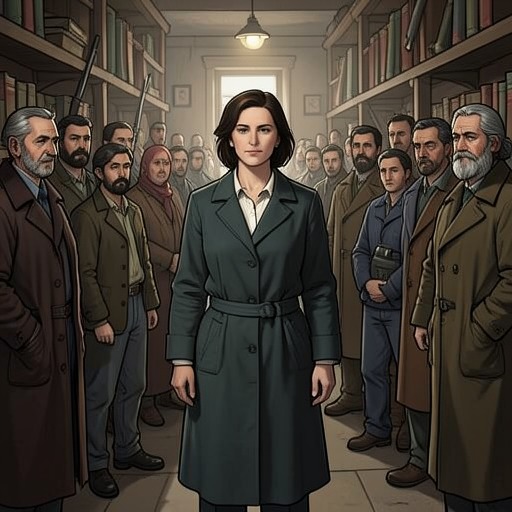
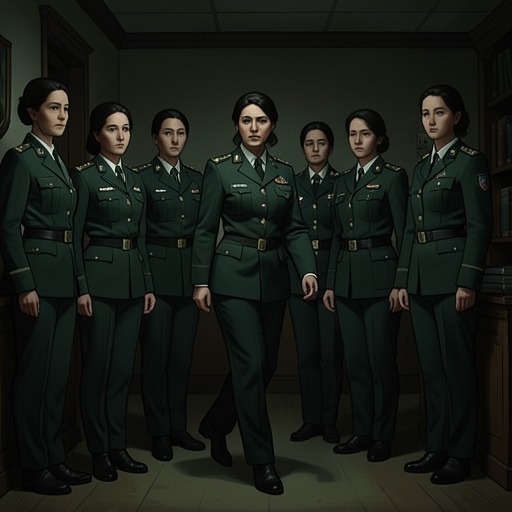
Black Box (Jennifer Egan Edition)Beauty is a tactical identity in Black Box: a performance of charm intended to make an operative welcome, unthreatening, and close enough to overhear significant conversations. Its governing paradox is that its bearer must be both irresistible and invisible. The role turns appearance and social ease into instruments of access, yet its instructions also insist that beauty is not a stable essence—and that danger can make the identity impossible to maintain.
A Role Built from Contradiction
Beauty is defined less by an individual’s inherent qualities than by a set of behaviors to be projected. The instructions name giggles, bare legs, and shyness as necessary ingredients, directing attention toward a calculated impression rather than an inner truth. The first thirty seconds in another person’s presence matter especially: when perception and projection compete, the operative is told to prioritize projection. Success is measured by a change in the man being approached, whose eyes lose their sharpness. Beauty is therefore both an appearance and an effect on someone else’s attention.
That effect depends on an apparent contradiction. The operative must attract notice enough to become welcome, but not so much that she appears to be pursuing a conspicuous purpose. The aim is not simply to be admired; it is to become ordinary and reassuring in the target’s surroundings. Beauty thus makes visibility selective: the persona is seen, while the work it enables is meant to remain unseen. The instructions’ clipped certainty makes this balancing act sound teachable, even as the opposing demands suggest how carefully it must be managed.
The role’s social method is mirroring. The operative is told not to contradict the Designated Mate and to reflect his attitudes, interests, desires, and tastes. Even asking where he grew up after he asks the same question is identified as a form of mirroring. These gestures are not presented as intimacy for its own sake. Their stated purpose is to become part of his atmosphere, a source of comfort and ease; only then will he lower his guard nearby and allow significant conversations to take place within earshot. The persona converts agreement into access.
Appearance as Operational Practice
Beauty is maintained through change as well as consistency. The operative is expected to return to her room and change clothes often, appearing fresh at mealtimes. The instruction describes the desired effect as being a lovely, innocuous, evolving surprise. A crisp white sundress against tanned skin is offered as attractive, while overbright colors are discouraged because they draw attention and hinder camouflage. Clothing is not merely decorative in this scheme: it helps regulate how conspicuous the persona appears, and repeated changes keep her presentation fresh without abandoning its unobtrusive purpose.
This combination of evolution and reassurance extends the role beyond clothing. Mirroring gives the Designated Mate a familiar emotional environment; the changing appearance supplies novelty within it. The operative is encouraged to adapt to the man’s preferences while keeping the overall impression harmless. Beauty’s techniques therefore work at two scales: small conversational choices make the operative seem agreeable, while dress and demeanor sustain an impression suited to the room and occasion. The instructions treat both scales as practical disciplines rather than spontaneous expressions of personality.
The role is also framed through a direct, atomized sequence of lessons rather than through a continuous account of action. The author’s note explains that Black Box was conceived around lessons derived from each step, with the narrator’s story-shape emerging through those instructions. That form suits Beauty: its rules arrive as compact directives that can be absorbed one at a time, while their accumulation reveals a demanding system of performance. The author also describes taking a character from a naturalistic story into a spy-thriller version. In that transformation, Beauty functions as part of the genre shift: social behavior and appearance become operational procedures.
Limits and Exposure
The instructions finally unsettle the identity they have so carefully constructed. They state that no beauty is really a beauty, denying that the category names an essential or permanent kind of person. The phrase recasts the role as a condition produced by expectation and performance. A woman holding a gun and a baby, for example, no longer qualifies as a beauty. The line marks a limit to the persona: the visible facts of danger and responsibility can override the carefully maintained appearance.
That limit is not merely cosmetic. The instructions warn that the alpha beauty of a violent man will know where his firearm is kept and how to use it. They also caution that disabling a gun holder is likely to hurt the baby she is carrying. If self-preservation requires harming an innocent person, the guidance can offer no more than guidelines. The scene of a woman with a gun and a baby thus exposes a conflict the techniques of charm cannot resolve: the role’s camouflage may bring an operative close to danger, but it cannot turn every consequential choice into a manageable procedure.
Beauty’s significance lies in this movement from usable performance to acknowledged instability. At first, giggles, shyness, mirrored tastes, fresh clothes, and a softened gaze appear to form a practical recipe for access. Yet the role’s own maxims deny that beauty is an essence, and its emergency guidance reaches a point where instructions cannot decide what must be done. The persona can make an operative seem comfortable and unobtrusive; it cannot guarantee safety, erase the consequences of violence, or supply a complete answer when survival threatens an innocent person.